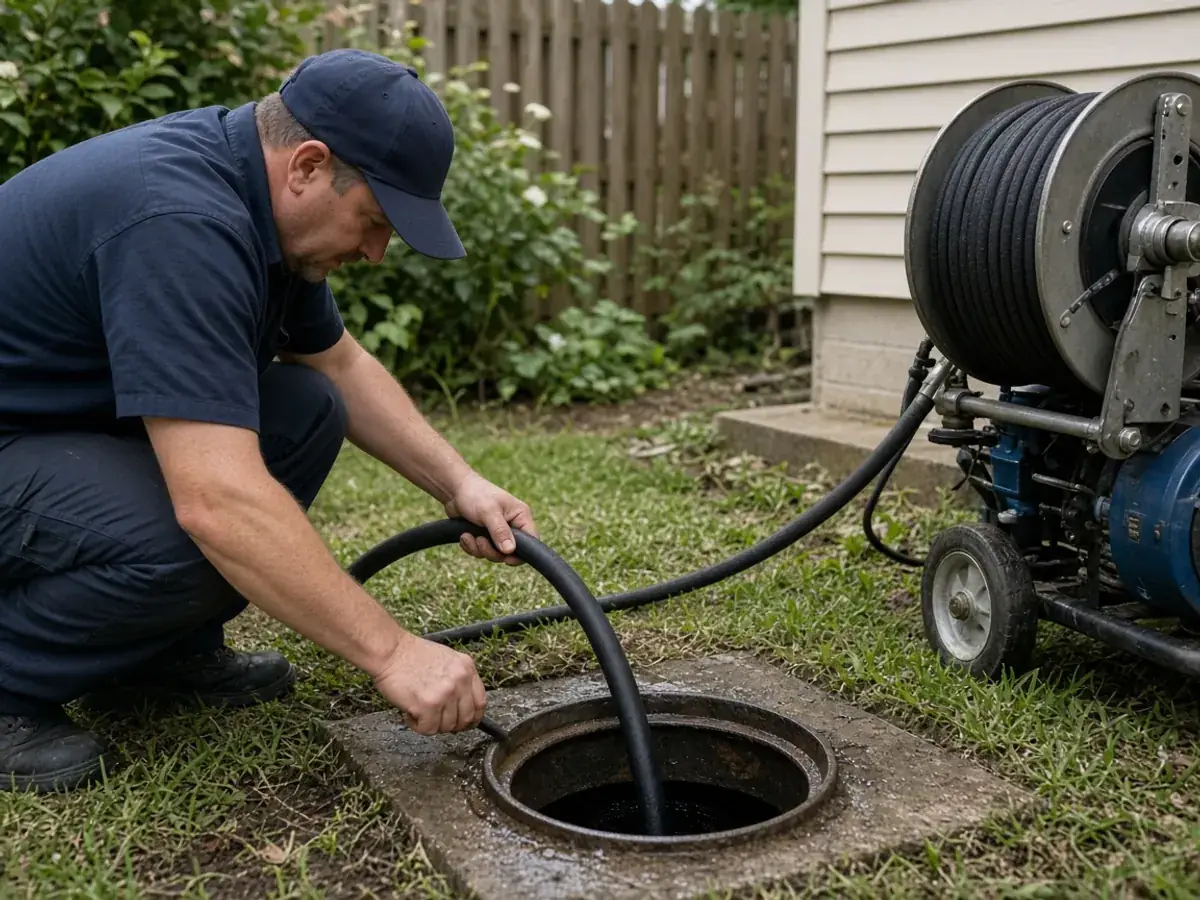
Snaking (cabling) bores a hole through a clog and is the usual first step for most blockages. Hydro-jetting scours the pipe wall with high-pressure water and is better for grease buildup and recurring clogs, but it needs pipe in good enough condition. For Lakewood's older laterals, a camera inspection often decides between them.
Side-by-side
| Factor | Snaking | Hydro-jetting |
|---|---|---|
| How it works | Rotating cable cuts through the clog | High-pressure water scours the pipe |
| Best for | Simple clogs, hair, single blockages | Grease, scale, sludge, fine roots |
| Cleans pipe walls | Partly | More thoroughly |
| Risk to damaged pipe | Lower | Higher on cracked or broken pipe |
| Published cost (sewer line) | about $150–$500 (HomeGuide) | about $250–$800 (HomeGuide) |
| Typical prep | None | Camera inspection often recommended |
Source: HomeGuide sewer line repair cost.
Which is right?
- Snake a first-time clog, a sink or tub clog, or a line you know is fragile.
- Jet a kitchen line coated in grease, a main line that clogs repeatedly, or a line with fine roots, after a camera shows it can take the pressure.
- Repair instead of either when the camera shows breaks, bellies or collapse. See sewer line repair.
Not sure what you need? Talk it through by phone.
Call (708) 350-9399Lakewood context
Many laterals date from the early 1950s, per the city's history, and roots are common. See tree roots in Lakewood sewer lines, drain cleaning and hydro-jetting.
What should you ask on the call?
- Which option fits the condition and layout of my home, and why?
- What extra work would each option need, such as gas line, venting, electrical, drywall or a permit?
- What's the expected lifespan and maintenance for each?
- What warranty comes with the parts and the labor?
- Can I get prices for both options, itemized the same way?
The right answer often depends on things only a site visit can show, like pipe condition, gas line size and available space. A good provider will explain the trade-offs rather than push one option.
What about Lakewood homes affects this choice?
Most Lakewood houses were built between 1950 and 1953, according to the City of Lakewood's history. They're mostly single-story homes on concrete slabs, with the water heater in a garage, closet or outdoor shed, and many still have some original galvanized supply pipe and early sewer laterals. That shapes the options: attic routing makes repipes simpler, garage heaters raise placement and permit questions, older gas lines may need upsizing for tankless units, and old laterals may not suit aggressive cleaning. The Lakewood Building and Safety permits page lists which projects often need a permit.
How was this guide researched?
This guide was written for Lakewood, California homeowners and checked against the sources below on November 11, 2026. Rules and prices change, so confirm anything important with the agency or provider. See our editorial policy.