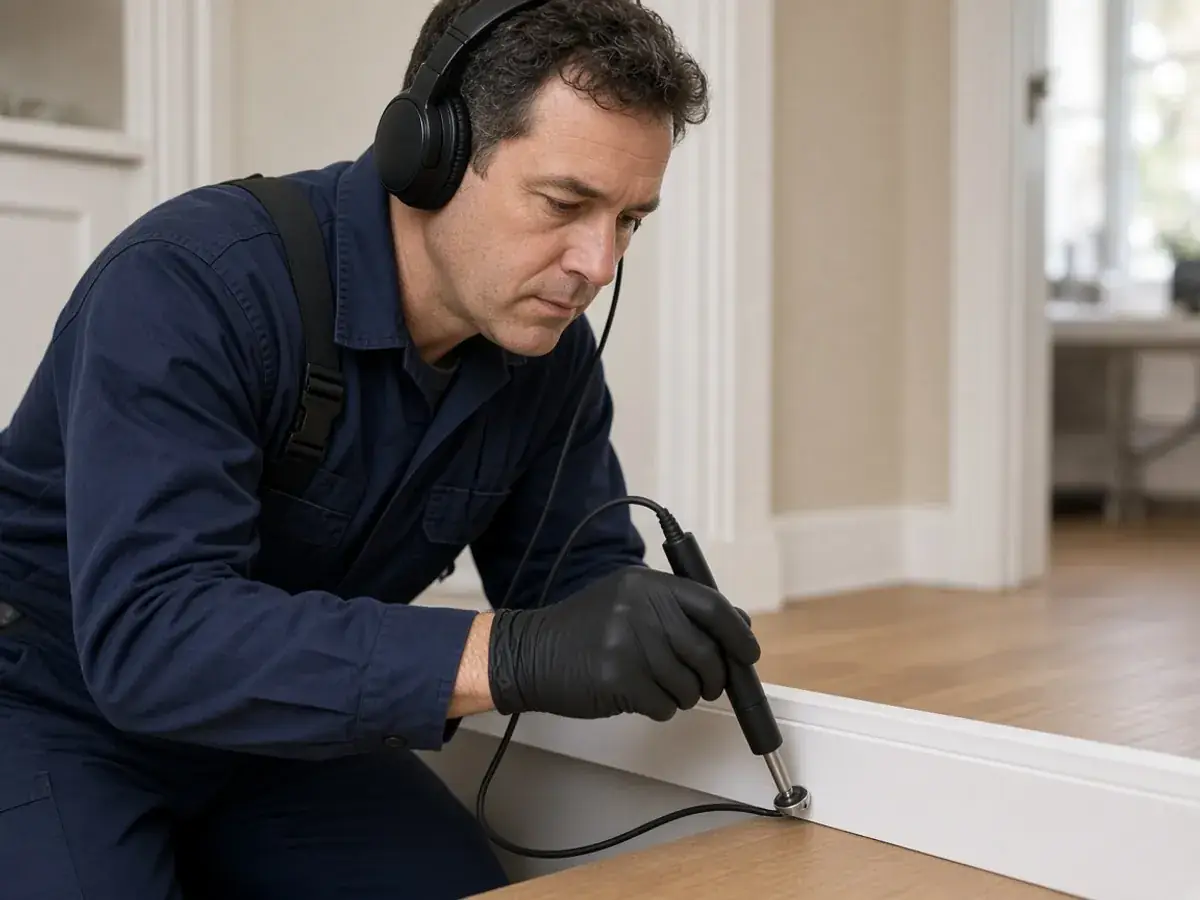
Leak detection finds hidden water leaks in walls, ceilings, under slabs and in buried lines, using meter tests, pressure tests, acoustic listening and thermal imaging so the repair opens as little as possible. Many Lakewood homes from the early 1950s are built on concrete slabs with supply pipe running under or through the floor, so a warm spot, a hissing sound or a meter that keeps spinning are signs to take seriously.
Warning signs of a hidden leak
Watch for a water bill that climbs without a change in use, the sound of running water when everything is off, warm or damp spots on the floor, cracks or bulges in flooring, mildew smells, stains on drywall or baseboards, and low water pressure. Our high water bill troubleshooting guide walks through a simple meter test you can do first.
Slab leaks in Lakewood's tract homes
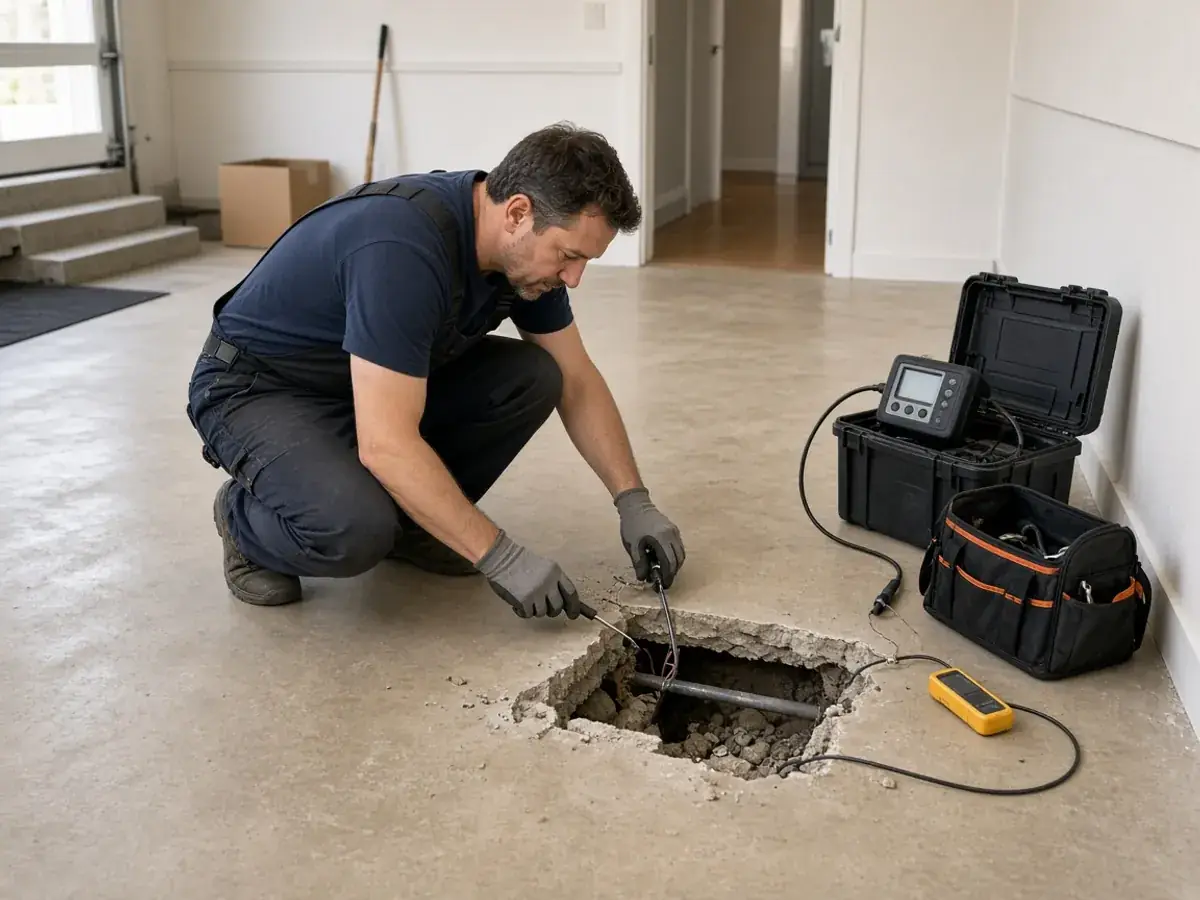
The City of Lakewood's history records that the Lakewood Park Corporation built 17,500 homes between 1950 and 1953. Many were slab-on-grade, with supply lines in or under the slab. As those pipes age, pinholes and failed joints can leak into the slab. Hot-water line leaks are often found first, because they make a warm spot on the floor. Our guide to slab leaks in Lakewood homes covers the options.
Not sure what you need? Talk it through by phone.
Call (708) 350-9399How leaks are found
A provider usually starts by confirming the leak at the meter, isolating hot and cold sides, and pressure-testing sections of piping. Acoustic equipment listens for the hiss of water escaping under pressure. Thermal cameras show temperature differences from hot-water leaks or wet areas. The aim is to mark the leak closely so the floor, wall or yard is opened only where needed.
Repair options once the leak is found
Options include a spot repair through the slab or wall, rerouting the affected line through the attic or walls, or repiping when the original pipe is failing in several places. For outdoor service lines, see water line repair. Ask the provider to explain why they recommend one option over another, and whether it is likely to be the first of several leaks.
Who owns the leak: you or the utility?
Leaks on the house side of the meter are the owner's to repair. Leaks at or before the meter belong to the water provider. Lakewood has two: residents east of the San Gabriel River (ZIP 90715) are served by Golden State Water Company, and the rest of the city by the City of Lakewood, according to the city's new-resident utilities guide. If water is pooling at the meter box, call your water provider first.
What should you have ready when you call about leak detection?
- Your address or nearest cross streets, so coverage can be checked.
- What you've noticed, where in the house, and when it started.
- Which fixtures are affected, and whether more than one is acting up.
- Anything you've already tried or shut off.
- The home's approximate age, and whether it's on a slab, if you know.
Where around Lakewood can you call about leak detection?
Calls come from all three Lakewood ZIP codes, 90712, 90713 and 90715, and from nearby cities. There are local leak detection pages for Bellflower, Cerritos, East Long Beach, Paramount, Hawaiian Gardens, Artesia, Downey, Norwalk, Signal Hill, Los Alamitos, Cypress, Seal Beach. Coverage for your exact address is confirmed on the call.