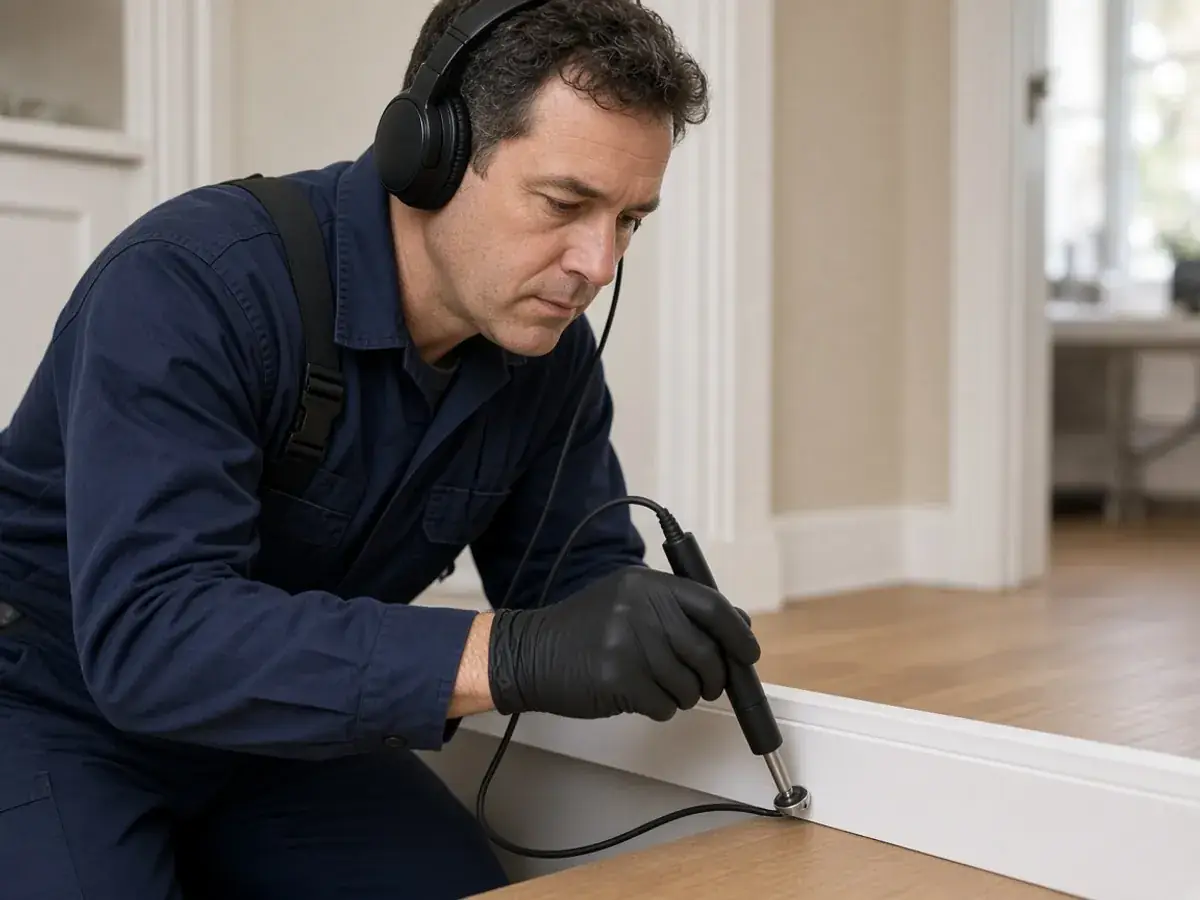
A sudden jump in your water bill with no change in use usually means a leak: a running toilet, a dripping fixture, an irrigation leak, or a hidden supply-line or slab leak. The water meter test tells you quickly whether water is escaping, and where to look next.
The meter test
- Turn off all water inside and out, including irrigation.
- Find your meter (usually in a box near the street) and watch the leak indicator for 15 to 30 minutes.
- If it moves, there's a leak.
- Close the main shutoff at the house. If the meter still moves, the leak is in the buried line between the meter and the house. See underground pipe repair.
Toilet dye test
Add a few drops of food coloring to each toilet tank. If color shows in the bowl within 15 minutes without flushing, the flapper is leaking. See toilet repair and running toilet fixes.
Not sure what you need? Talk it through by phone.
Call (708) 350-9399Other places to check
- Faucets and showerheads
- Hose bibs and irrigation valves
- Water heater relief valve discharge
- Water softener or filter systems
- Warm spots on floors (possible slab leak). See leak detection.
Your water provider
Lakewood residents west of the San Gabriel River are on City of Lakewood water. East of the river (90715), Golden State Water serves homes, per the Lakewood utilities guide. Your provider can show usage history and may be able to explain bill changes. The EPA WaterSense Fix a Leak guidance has more tips.
When to call
Call when the meter test shows a leak you can't find, or when you see signs of a slab or wall leak. See fixing leaks to save water.
What should you tell the provider when you call?
Describe what you've noticed and when it started, which fixtures are affected, what you've already checked or shut off, and your address or cross streets. For water heaters, give the fuel type, tank size and approximate age from the label. For drain and sewer problems, say whether you know where your cleanout is. That helps the provider understand the likely cause and bring the right equipment. Coverage for your address is confirmed on the call.
When is it not safe to keep troubleshooting?
Stop and call if you smell gas (leave first, and call SoCalGas or 911 from outside), if water is near electrical outlets or appliances, if sewage is backing up into the house, or if a fix needs you to open a gas control, an electrical panel or a pressurized line. Don't cap or plug a water heater relief valve. If water is spreading, close the main shutoff first.
How was this guide researched?
This guide was written for Lakewood, California homeowners and checked against the sources below on November 11, 2026. Rules and prices change, so confirm anything important with the agency or provider. See our editorial policy.