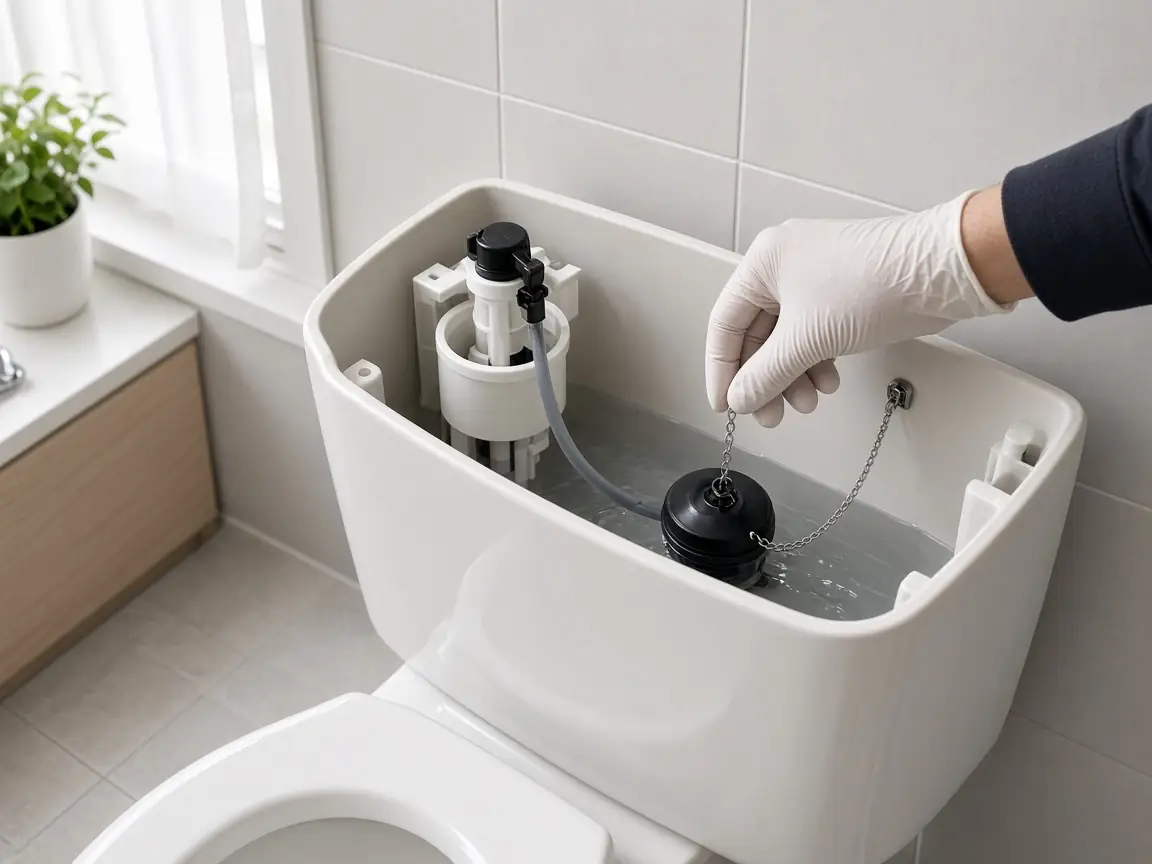
A toilet that keeps running almost always has one of four problems: a worn flapper, a chain that's too short or tangled, a fill valve set too high, or a cracked overflow tube. Most can be checked in a few minutes with the tank lid off.
Step 1: Look inside the tank
Remove the lid and watch a flush. Is the flapper closing fully? Is the chain catching under it? Is water spilling into the overflow tube?
Step 2: Flapper
Do the dye test: a few drops of food coloring in the tank, wait 15 minutes. Color in the bowl means the flapper leaks. Flappers are inexpensive and usually easy to replace. Match the size (2-inch or 3-inch).
Not sure what you need? Talk it through by phone.
Call (708) 350-9399Step 3: Chain
The chain should have a little slack, about half an inch. Too tight, and the flapper can't seal. Too long, and it can get caught under the flapper.
Step 4: Water level and fill valve
The water line should sit below the top of the overflow tube, usually at a mark inside the tank. Adjust the float. If the fill valve hisses or won't shut off, it may need replacing.
Step 5: Overflow tube
A cracked overflow tube lets water drain constantly and usually means replacing the flush valve, which is a bigger job.
Why it matters
The EPA WaterSense Fix a Leak guidance lists running toilets among the most common household leaks. See high water bill and fixing leaks to save water.
When to call
Call when parts don't fix it, the tank or bowl is cracked, the toilet also leaks at the base, or you'd rather not do it yourself. See toilet repair.
What should you tell the provider when you call?
Describe what you've noticed and when it started, which fixtures are affected, what you've already checked or shut off, and your address or cross streets. For water heaters, give the fuel type, tank size and approximate age from the label. For drain and sewer problems, say whether you know where your cleanout is. That helps the provider understand the likely cause and bring the right equipment. Coverage for your address is confirmed on the call.
When is it not safe to keep troubleshooting?
Stop and call if you smell gas (leave first, and call SoCalGas or 911 from outside), if water is near electrical outlets or appliances, if sewage is backing up into the house, or if a fix needs you to open a gas control, an electrical panel or a pressurized line. Don't cap or plug a water heater relief valve. If water is spreading, close the main shutoff first.
How was this guide researched?
This guide was written for Lakewood, California homeowners and checked against the sources below on November 11, 2026. Rules and prices change, so confirm anything important with the agency or provider. See our editorial policy.