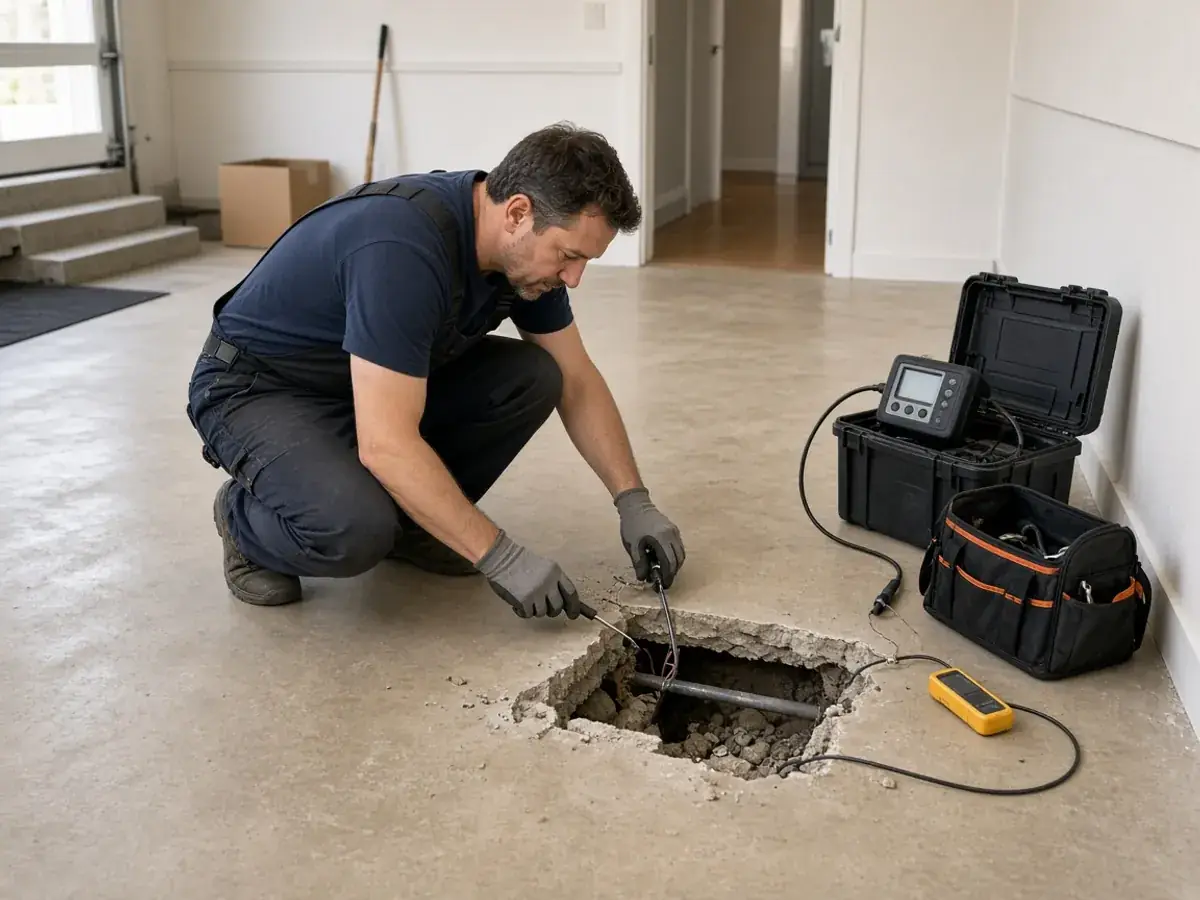
A slab leak is a leak in a water line that runs in or under a home's concrete slab foundation. In Lakewood, where thousands of single-story homes were built on slabs in the early 1950s, slab leaks often show up as a warm spot on the floor, a meter that keeps moving, or the sound of running water when nothing is on.
Why Lakewood homes are prone to slab leaks
The City of Lakewood's history describes the Lakewood Park Corporation building 17,500 homes in three years. Fast tract construction on Lakewood's flat terrain meant slab-on-grade foundations, with water lines in or under the concrete. After 70-plus years, those pipes can develop pinholes from corrosion, wear where they rub against concrete or gravel, or fail at joints. Hot-water lines tend to fail first, because heat speeds up corrosion and expansion.
Signs to watch for
- A warm or hot spot on the floor, often in a hallway, kitchen or bathroom.
- The sound of running water with all fixtures off.
- A water bill that jumps with no change in use.
- The water meter's leak indicator moving with everything off.
- Damp carpet, lifting vinyl or cracked tile with no obvious source.
- Lower hot-water pressure, or a water heater that runs more than usual.
Try the meter test in our high water bill guide before you call.
Not sure what you need? Talk it through by phone.
Call (708) 350-9399How slab leaks are found
A provider confirms the leak at the meter, isolates the hot and cold sides, and pressure-tests sections. Acoustic listening equipment picks up the hiss of escaping water, and thermal imaging shows warm areas from hot-water leaks. The goal is to mark the leak closely, so the floor is opened in one spot, or not at all. See leak detection.
Repair options
- Spot repair: open the slab at the leak, repair the pipe, patch the concrete and flooring. Best when the rest of the piping is sound.
- Reroute: abandon the leaking line under the slab and run a new line through the attic and walls. Common in Lakewood's single-story homes.
- Repipe: replace the whole supply system when the original pipe is failing in several places. See repiping.
Who pays?
Leaks inside the house are the owner's responsibility. Some homeowners policies cover access and water damage but not the pipe itself. Check your policy. Our leak detection cost guide lists published price ranges with their limitations.
A local note
Lakewood residents west of the San Gabriel River get city water from deep groundwater wells, and east of the river (ZIP 90715) Golden State Water serves homes, according to the City of Lakewood water services page. Either provider can help you read your meter and usage history, which is useful evidence when you're trying to confirm a leak.
What to do right now
If you suspect a slab leak, note when you first noticed it, take photos of any warm or damp areas, and check the meter. If water is visibly pooling or the floor is hot, close the main shutoff and call. If you're buying a home, see our home-buyer checklist. And if you have galvanized pipe, read galvanized pipes in Lakewood homes.
When should you call a plumber about this?
Call when you see active leaks, water damage, sewage, repeated clogs, low pressure across the house, or anything involving gas. Call too when a job needs a permit, or when you're buying a home and want an inspection before you close. Describe what you've noticed, the home's age and your address or cross streets. You'll hear on the call whether your address and job are covered.
How was this guide researched?
This guide was written for Lakewood, California homeowners and checked against the sources below on November 11, 2026. Rules and prices change, so confirm anything important with the agency or provider. See our editorial policy.