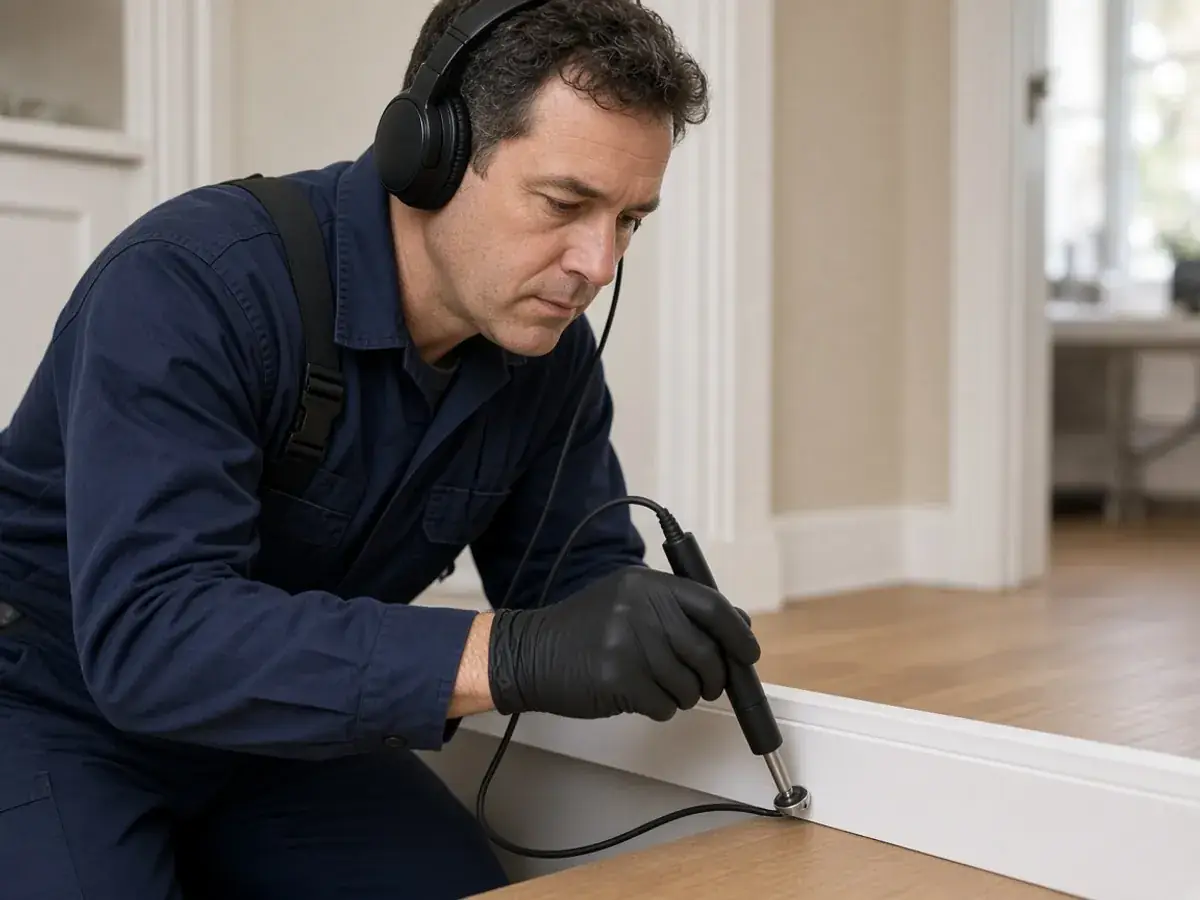
Leak detection in Seal Beach pinpoints hidden water leaks in slabs, walls, ceilings and buried lines, using pressure tests, listening equipment and thermal imaging, so only the necessary section has to be opened. A meter that moves with every tap off is the clearest sign of a hidden leak. Call (708) 350-9399 and ask whether your Seal Beach address is covered.
Where do hidden leaks happen in Seal Beach homes?
Seal Beach includes Old Town, developed in the 1920s south of Pacific Coast Highway; Leisure World, a 55-and-over community completed in 1962; and the College Park neighborhoods. Coastal air and older Old Town homes are hard on exposed piping and water heaters. Supply lines in or under concrete slabs, pinholes in aging copper, corroded galvanized pipe in walls, and buried service lines between the meter and the house are the usual suspects. Irrigation lines and toilet flappers cause many high bills, too.
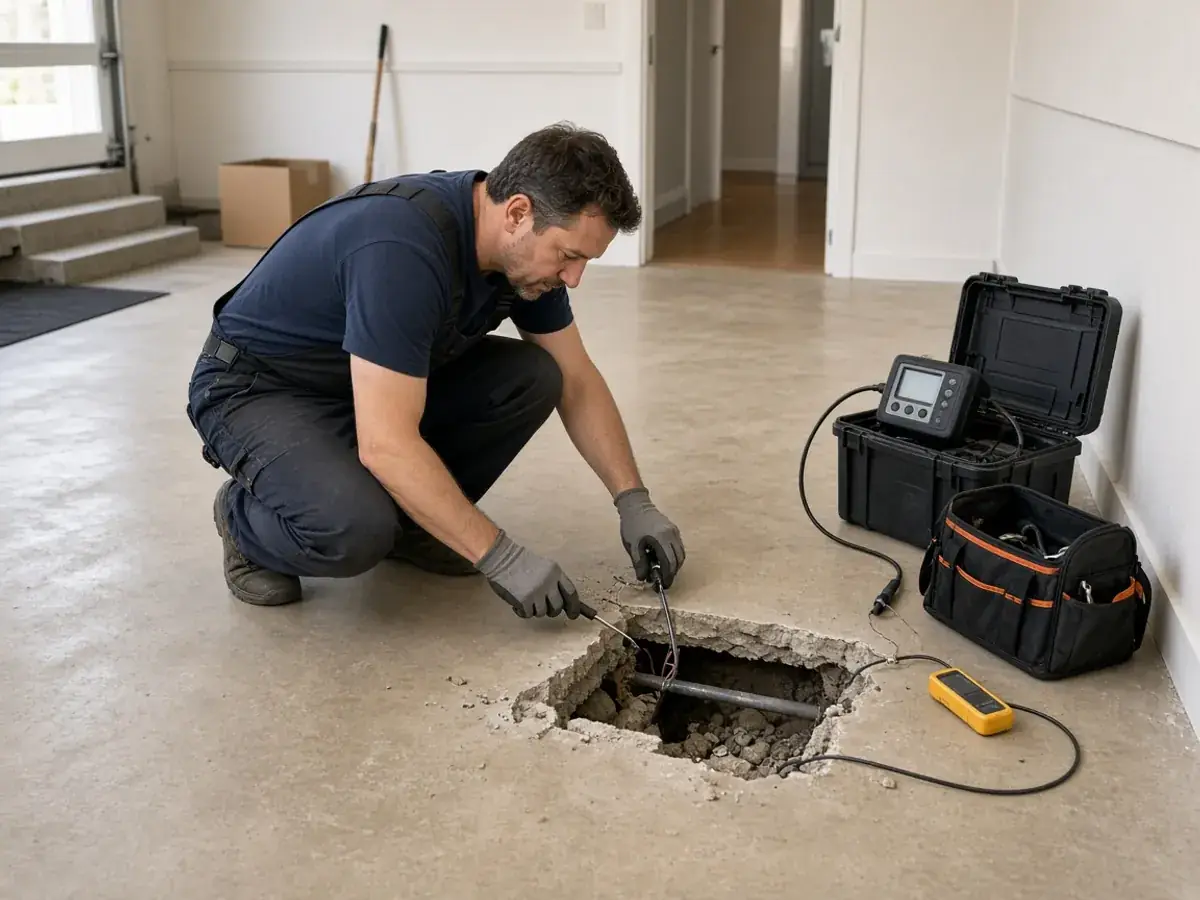
How can you check for a leak yourself?
Turn off every faucet, appliance and irrigation zone, then watch the meter's leak indicator for 15 to 30 minutes. If it moves, water is escaping somewhere. Close the house shutoff. If the meter still moves, the leak is probably underground between the meter and the house. Use a few drops of food coloring in each toilet tank to check flappers. See our high water bill guide.
Not sure what you need? Talk it through by phone.
Call (708) 350-9399What happens during professional leak detection?
Providers typically isolate hot and cold lines, pressure-test them, then use acoustic listening gear and sometimes thermal cameras to narrow the location. Once it's found, the choice is between a spot repair, rerouting the line through the attic or walls, or a partial or full repipe if the pipe is failing in several places.
Who handles leaks at the meter?
Water in Seal Beach comes from the City of Seal Beach, which owns and runs its own water, sewer and storm drain systems (Golden State Water serves the Rossmoor Center area), per the Seal Beach Public Works maintenance operations. Leaks at or before the meter, or in the street, are the water provider's responsibility, so contact them first. Leaks on the house side of the meter are a private plumbing repair.
What's different about leak detection in Seal Beach?
Seal Beach owns its own water and sewer systems, and parts of Old Town date from the 1920s, so older sewer laterals and corrosion near the coast are frequent concerns. Whether you live near the Seal Beach Pier or Main Street in Old Town, the call works the same way: describe the problem, give your address or cross streets, and ask whether your address is covered.
What should you have ready when you call?
- The result of the meter test with everything off
- Where you've seen signs: warm floors, damp spots, stains or a wet yard
- Your recent water bills, if usage has jumped
- Whether the home is on a slab, and whether it's been partly repiped
- Your Seal Beach address or nearest cross streets, so coverage can be checked
The more specific you can be, the easier it is for the provider to tell you on the call whether the job is a fit and what a visit would involve.
What does leak detection cost?
Prices are set by the provider, not by this website. Our leak detection cost guide lists published national ranges with their sources and dates, and explains what moves the price. Use it to plan and to compare quotes, not as a price for your job.
How do you get leak detection in Seal Beach?
- Call (708) 350-9399.
- Describe the problem, which fixtures are affected and what you've already shut off.
- Give your Seal Beach address or cross streets, and ask whether your address and job are covered.
- Ask how pricing works, whether a permit is needed, and what's included.
Related pages for Seal Beach
- Plumbing in Seal Beach: water provider, housing and official links
- Drain Cleaning in Seal Beach
- Sewer Line Repair in Seal Beach
- Water Heater Repair in Seal Beach
- Water Heater Replacement in Seal Beach
- Repiping in Seal Beach
- Leak detection nearby: Los Alamitos, East Long Beach, and Lakewood
- Read next: high water bill checklist