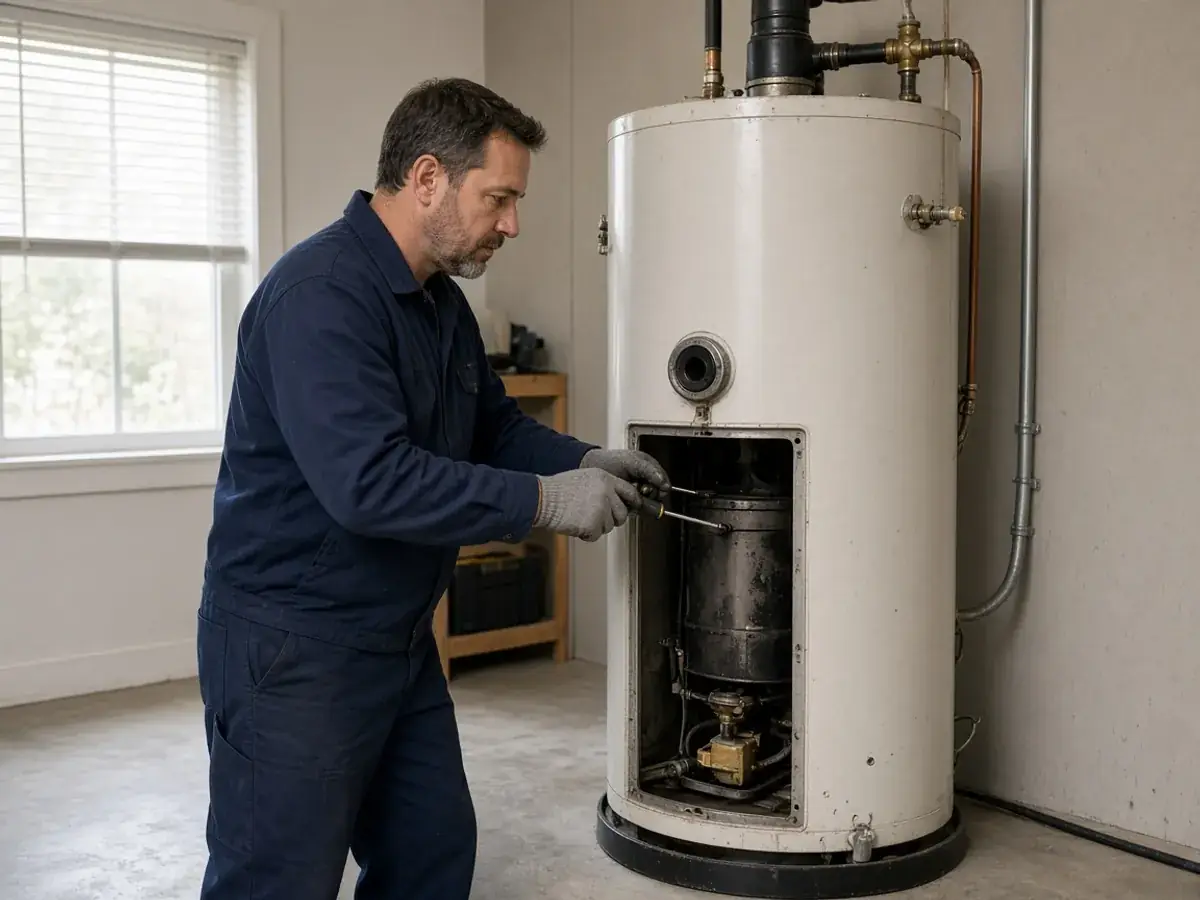
California Health and Safety Code section 19211 requires every water heater in the state to be braced, anchored or strapped to resist falling or moving horizontally in an earthquake. In Lakewood, that applies whether the heater is in a garage, a closet or an outdoor shed, and straps are checked when a heater is replaced under permit.
Why straps matter
In an earthquake, an unstrapped tank can tip or walk away from the wall. That can break the gas connector, causing a gas leak or fire risk, and break the water lines, causing flooding. A full 50-gallon tank weighs several hundred pounds. Strapping keeps the heater in place so its connections survive. The law is at California Health and Safety Code 19211.
What correct strapping usually looks like
- Two straps, one in the upper third of the tank and one in the lower third, kept clear of the controls.
- Straps wrapped around the tank and anchored to wall studs or masonry with appropriate fasteners, not just drywall.
- Little or no gap between the tank and the wall, or blocking to fill it, so the tank can't build up momentum.
- Flexible gas and water connectors so small movement doesn't break the lines.
Follow the strap kit's instructions and local requirements, which inspectors check during a water heater replacement.
Not sure what you need? Talk it through by phone.
Call (708) 350-9399Common problems in older Lakewood homes
Many Lakewood houses date from 1950 to 1953, per the City of Lakewood's history, and their heaters have been replaced several times since. Common issues include one strap instead of two, plumber's tape instead of a rated strap, anchors in drywall only, straps across the gas valve, and rigid water connections. Outdoor sheds may have weak back walls, which makes proper anchoring harder.
Other safety items to check at the same time
- Temperature and pressure relief valve discharge: routed to an approved location, never capped. See general plumbing repair.
- Garage elevation: gas heaters in garages commonly need their ignition source raised at least 18 inches unless the unit is vapor-resistant.
- Venting: secure vent connectors with correct clearances.
- Gas shutoff: a working shutoff valve within reach.
Permits
Lakewood treats water heater replacement as plumbing work that often needs a permit, and garage or outdoor heaters start with planning review. See water heaters in garages and sheds and the Lakewood home improvements guide.
After an earthquake
Check the heater for movement, smell for gas, and look for leaks. If you smell gas, leave and call the gas company or 911 from outside. If the heater moved or a connection was damaged, don't relight it. Call for an inspection. For general repairs, see water heater repair.
When should you call a plumber about this?
Call when you see active leaks, water damage, sewage, repeated clogs, low pressure across the house, or anything involving gas. Call too when a job needs a permit, or when you're buying a home and want an inspection before you close. Describe what you've noticed, the home's age and your address or cross streets. You'll hear on the call whether your address and job are covered.
How was this guide researched?
This guide was written for Lakewood, California homeowners and checked against the sources below on November 11, 2026. Rules and prices change, so confirm anything important with the agency or provider. See our editorial policy.