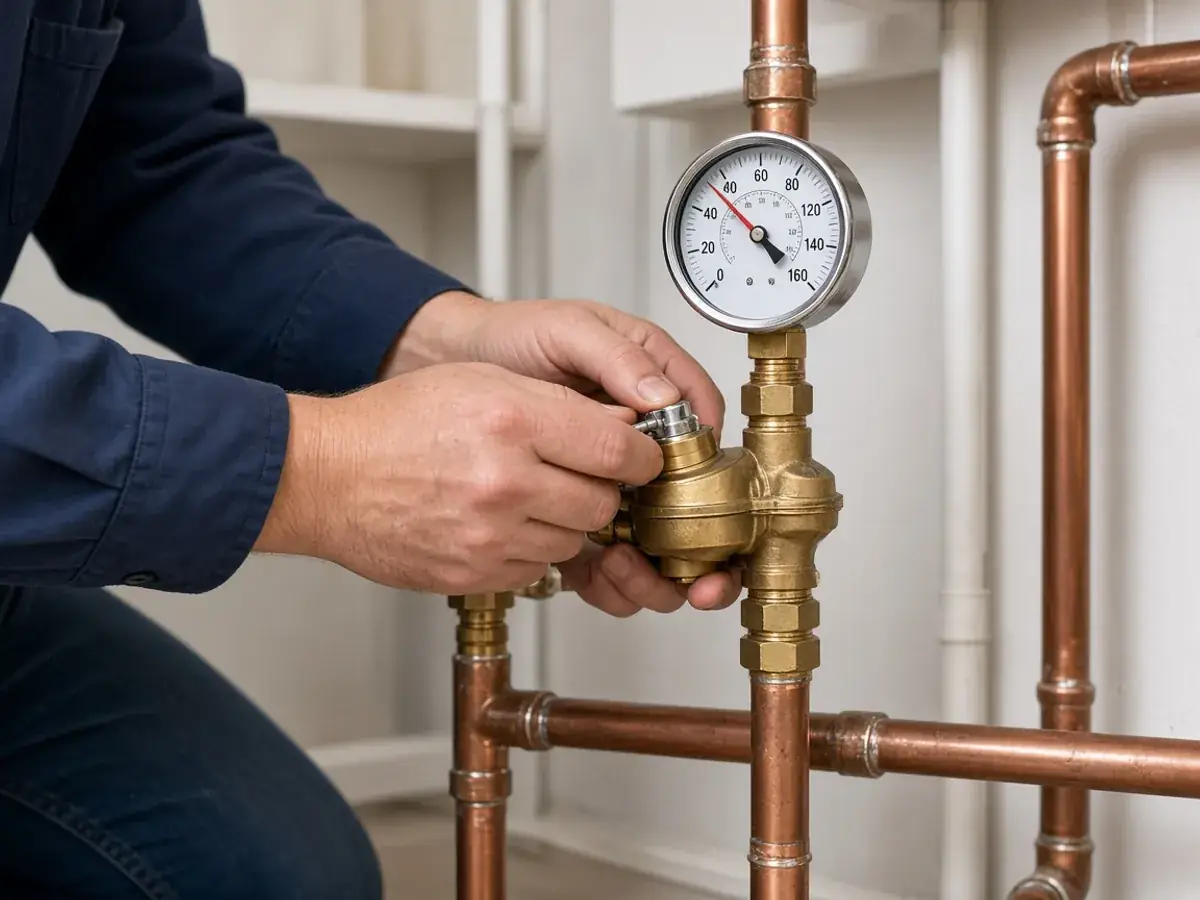
Low water pressure usually comes from a clogged aerator or showerhead, a partly closed valve, a failing pressure regulator, corroded galvanized pipe, or a utility-side issue. Start by checking whether the problem is one fixture, hot water only, or the whole house.
Quick checks
- One fixture? Unscrew and clean the aerator or showerhead.
- Hot only? Check the valves at the water heater and the heater's condition. See water heater repair.
- Whole house? Make sure the main shutoff is fully open.
- Sudden, and the neighbors too? Contact your water provider. In Lakewood, that's the City of Lakewood west of the San Gabriel River, or Golden State Water east of it, per the city water services page.
Measure it
A hose-bib pressure gauge costs little. With all water off, read the static pressure. Very low readings with normal street pressure point to the regulator or piping. Readings well above 80 psi point to a regulator problem.
Not sure what you need? Talk it through by phone.
Call (708) 350-9399Galvanized pipe
In Lakewood's early-1950s homes, corroded galvanized supply pipe is a common cause of slowly worsening pressure. See galvanized pipes in Lakewood homes and repiping.
Pressure regulator
A failing pressure-reducing valve can cause low or unstable pressure. Many can be adjusted or replaced. See water pressure problems.
Service line
If even the hose bib nearest the meter is weak, the buried service line may be restricted or leaking. See water line repair.
When to call
Call when the cause isn't an aerator or valve, pressure is very high or very low on a gauge, or you suspect galvanized pipe or a service line leak. Note hot vs cold, which fixtures, and when it started.
What should you tell the provider when you call?
Describe what you've noticed and when it started, which fixtures are affected, what you've already checked or shut off, and your address or cross streets. For water heaters, give the fuel type, tank size and approximate age from the label. For drain and sewer problems, say whether you know where your cleanout is. That helps the provider understand the likely cause and bring the right equipment. Coverage for your address is confirmed on the call.
When is it not safe to keep troubleshooting?
Stop and call if you smell gas (leave first, and call SoCalGas or 911 from outside), if water is near electrical outlets or appliances, if sewage is backing up into the house, or if a fix needs you to open a gas control, an electrical panel or a pressurized line. Don't cap or plug a water heater relief valve. If water is spreading, close the main shutoff first.
How was this guide researched?
This guide was written for Lakewood, California homeowners and checked against the sources below on November 11, 2026. Rules and prices change, so confirm anything important with the agency or provider. See our editorial policy.