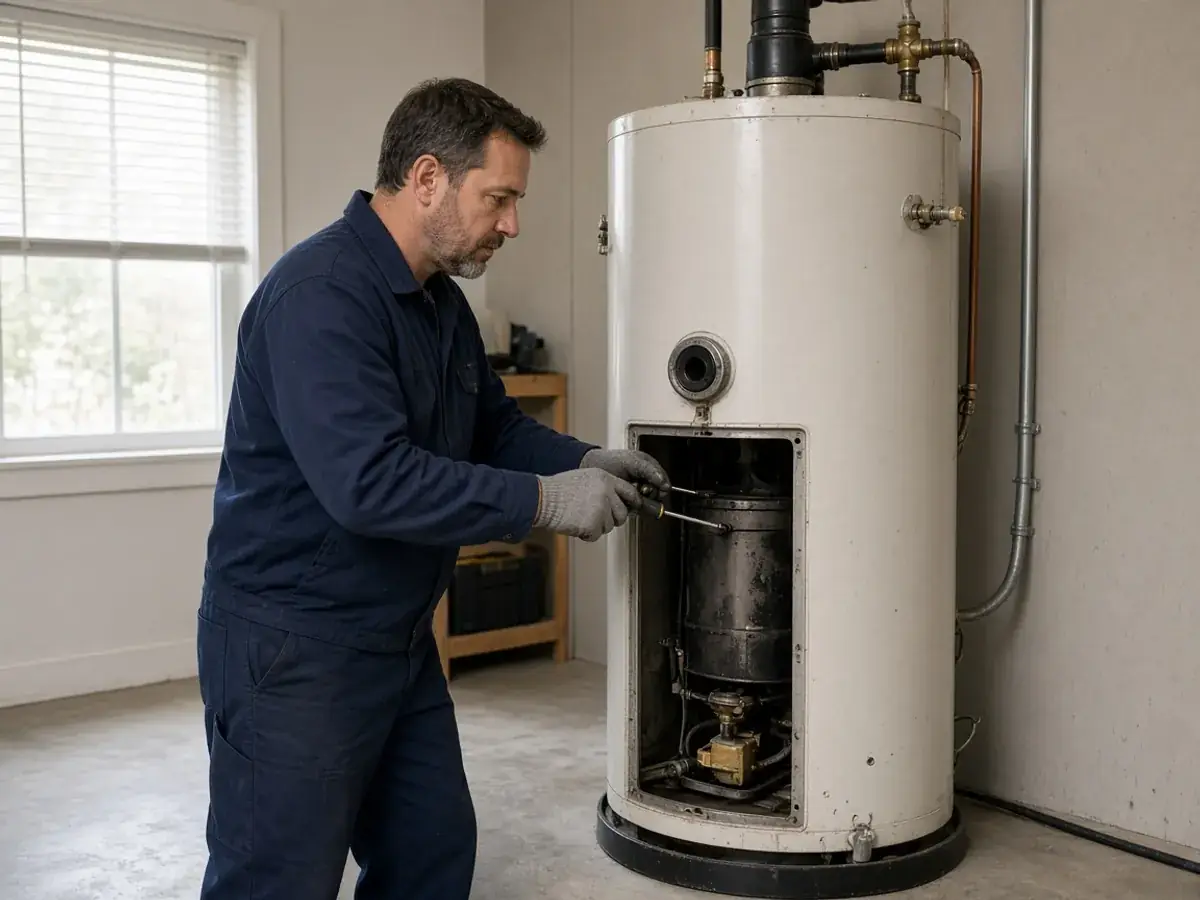
If you have no hot water, first check whether the problem is the whole house or one fixture. Then check the water heater's power or gas supply, pilot or ignition, and whether the tank is leaking. Gas heaters most often fail at the pilot, thermocouple or gas valve. Electric heaters most often fail at a breaker, element or thermostat.
Step 1: One fixture or the whole house?
If only one faucet or shower has no hot water, the fixture's cartridge or mixing valve may be the problem, not the heater. See faucet and sink repair. If every hot tap is cold, go to the heater.
Step 2: Gas water heaters
- Check that the gas valve on the supply line is on (the handle runs along the pipe).
- Look through the sight window for a pilot flame, or check for an error light on electronic-ignition models.
- If the pilot is out, relight it only by following the instructions on the heater's label.
- If it won't stay lit, the thermocouple or gas valve may have failed.
If you smell gas, don't relight anything. Leave the area and call SoCalGas or 911 from outside.
Not sure what you need? Talk it through by phone.
Call (708) 350-9399Step 3: Electric water heaters
- Check the breaker. If it has tripped, reset it once.
- If it trips again, stop. There may be a shorted element or wiring problem.
- Some heaters have a reset button behind an access panel. Turn the power off before opening any panel.
Step 4: Look for leaks and odd signs
Water at the base, rust at the fittings, or a rumbling tank all point to an aging heater. See water heater leaking.
Step 5: Not enough hot water
If you get some hot water, but it runs out quickly, sediment, a broken dip tube, a failing element or an undersized tank are likely. Lakewood's groundwater can add to sediment over time. See Lakewood groundwater.
When to call
Call when the pilot won't stay lit, the breaker trips again, the tank leaks, or the heater is old and failing. Note the fuel, size, age and what you've seen. See water heater repair and the U.S. Department of Energy consumer water heater page.
What should you tell the provider when you call?
Describe what you've noticed and when it started, which fixtures are affected, what you've already checked or shut off, and your address or cross streets. For water heaters, give the fuel type, tank size and approximate age from the label. For drain and sewer problems, say whether you know where your cleanout is. That helps the provider understand the likely cause and bring the right equipment. Coverage for your address is confirmed on the call.
When is it not safe to keep troubleshooting?
Stop and call if you smell gas (leave first, and call SoCalGas or 911 from outside), if water is near electrical outlets or appliances, if sewage is backing up into the house, or if a fix needs you to open a gas control, an electrical panel or a pressurized line. Don't cap or plug a water heater relief valve. If water is spreading, close the main shutoff first.
How was this guide researched?
This guide was written for Lakewood, California homeowners and checked against the sources below on November 11, 2026. Rules and prices change, so confirm anything important with the agency or provider. See our editorial policy.